Why Are BIM Standards Important?
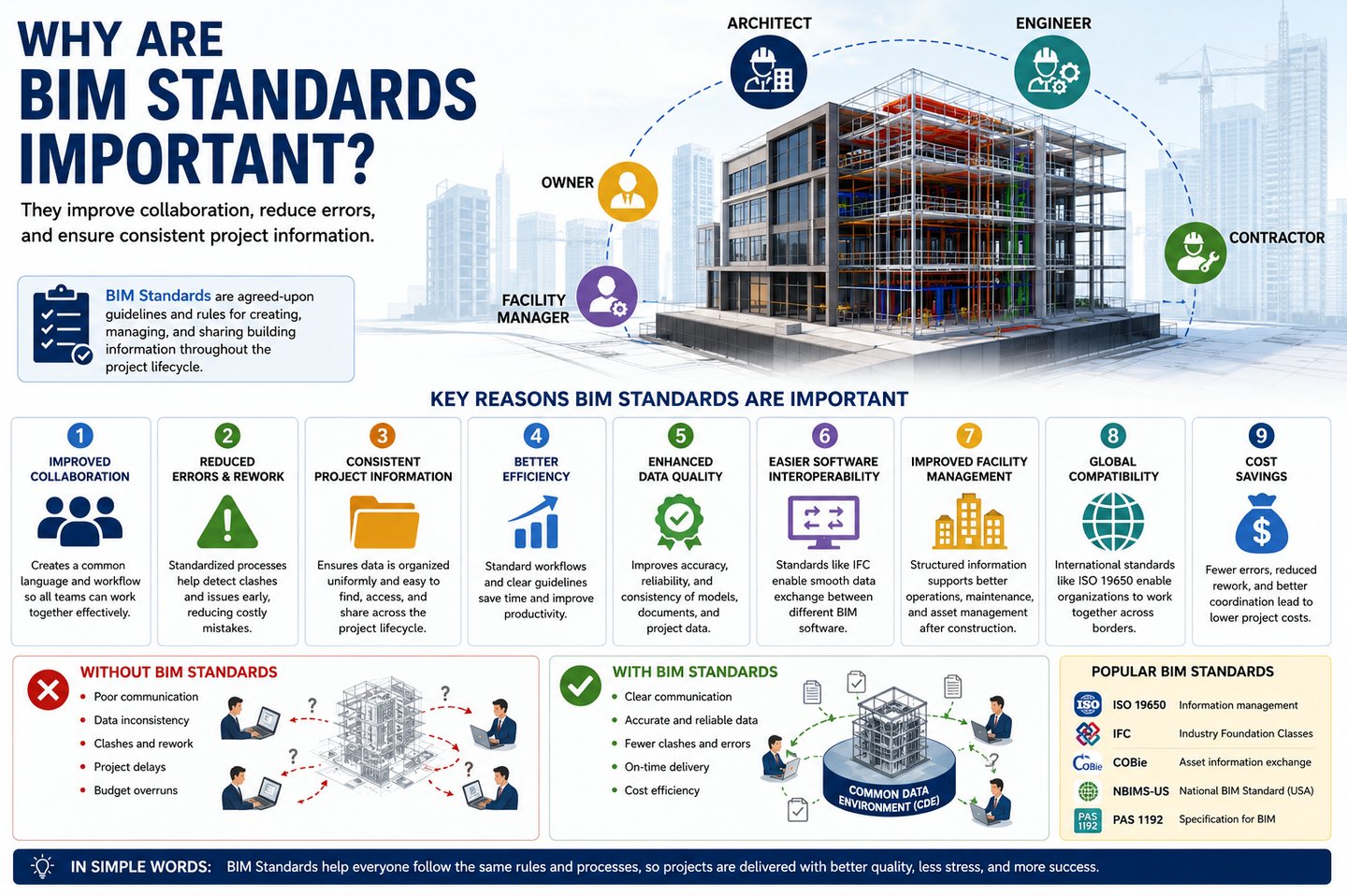
BIM Standards are important because they create a common framework for managing building information throughout a project. Without standards, teams may use different naming systems, workflows, or data formats, leading to confusion and costly mistakes.
2/10/20251 min read
Here are the main reasons why BIM Standards matter:
1. Improved Collaboration
BIM standards allow architects, engineers, contractors, and project managers to work together using the same structured information. This improves communication and teamwork across all project stages.
2. Reduced Errors and Rework
Standardized processes help detect clashes and inconsistencies early in the design phase. This reduces construction errors, delays, and expensive rework.
3. Consistent Project Information
BIM standards ensure that all project data is organized uniformly. This makes information easier to access, update, and share between stakeholders.
4. Better Efficiency
Teams spend less time fixing compatibility issues or searching for information. Standardized workflows improve productivity and speed up project delivery.
5. Enhanced Data Quality
Using BIM standards improves the accuracy and reliability of digital models, documents, and project records.
6. Easier Software Interoperability
Standards like IFC help different BIM software platforms exchange data smoothly, reducing technical problems.
7. Improved Facility Management
BIM standards help building owners manage maintenance, operations, and asset information long after construction is completed.
8. Global Compatibility
International standards such as ISO 19650 allow organizations from different countries to collaborate effectively on large projects.
9. Cost Savings
By minimizing mistakes, delays, and duplicated work, BIM standards help reduce overall project costs.
In Simple Words
BIM Standards help everyone involved in a construction project work smarter, faster, and more accurately by following the same rules and digital processes.