
Why BIM Is Necessary in Modern Construction: A Complete In-Depth Guide
Discover why BIM is necessary in modern construction projects. Learn how BIM improves collaboration, reduces costs, minimizes errors, enhances sustainability, and transforms the future of the construction industry.
5/10/20263 min read
Why BIM Is Necessary in Modern Construction
The construction industry has changed dramatically over the last decade. Buildings are becoming smarter, projects are becoming larger, and client expectations are higher than ever before. Traditional construction methods that relied on paper drawings, disconnected workflows, and manual coordination are no longer efficient enough for today’s complex projects.
This is where BIM (Building Information Modeling) becomes essential.
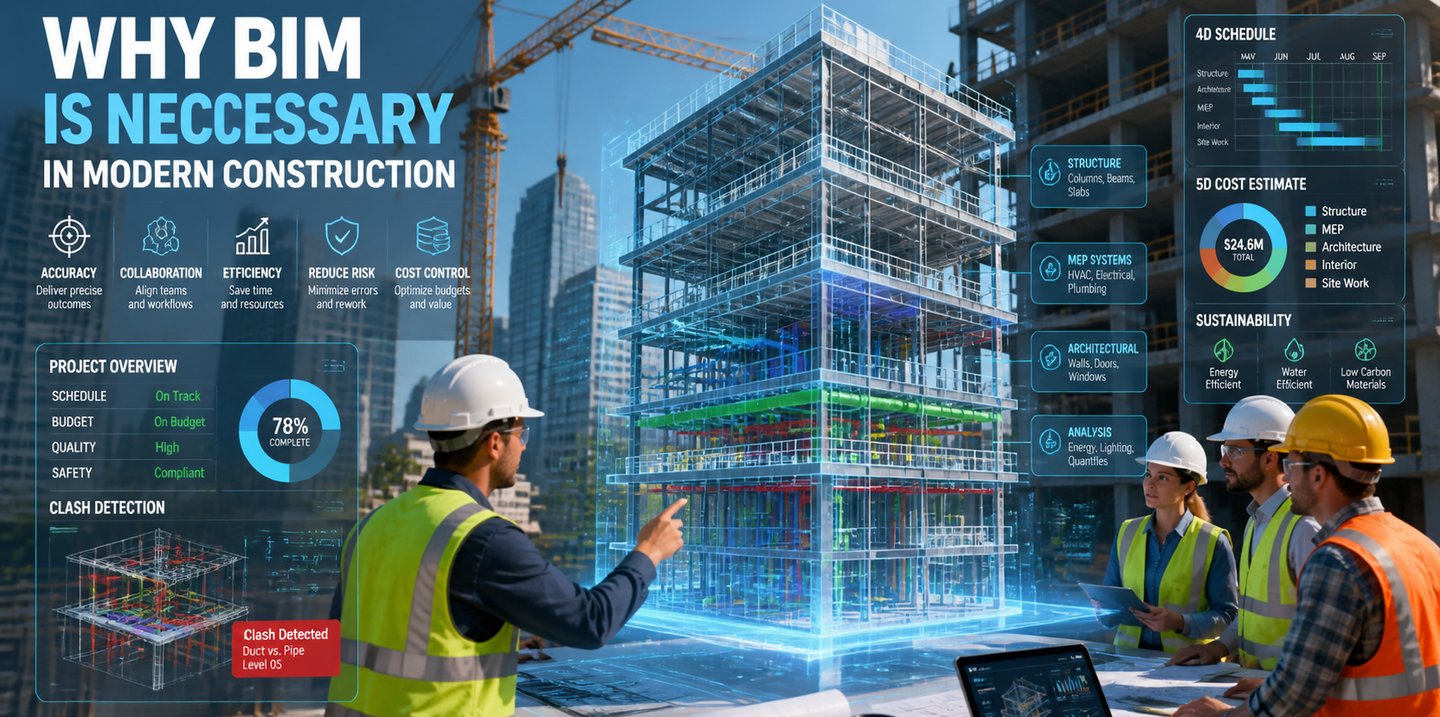
BIM is not just software or a 3D model. It is a complete digital process that transforms how buildings and infrastructure are planned, designed, constructed, and managed.
For companies like Qulix BIM, understanding the importance of BIM is critical because modern construction increasingly depends on digital collaboration, accurate planning, and intelligent project management.
In this detailed guide, we will explore why BIM is necessary, how it solves major construction challenges, and why it has become one of the most important technologies in the construction industry.
Understanding the Problems in Traditional Construction
To understand why BIM is necessary, it is important to first understand the problems in traditional construction workflows.
Communication Gaps
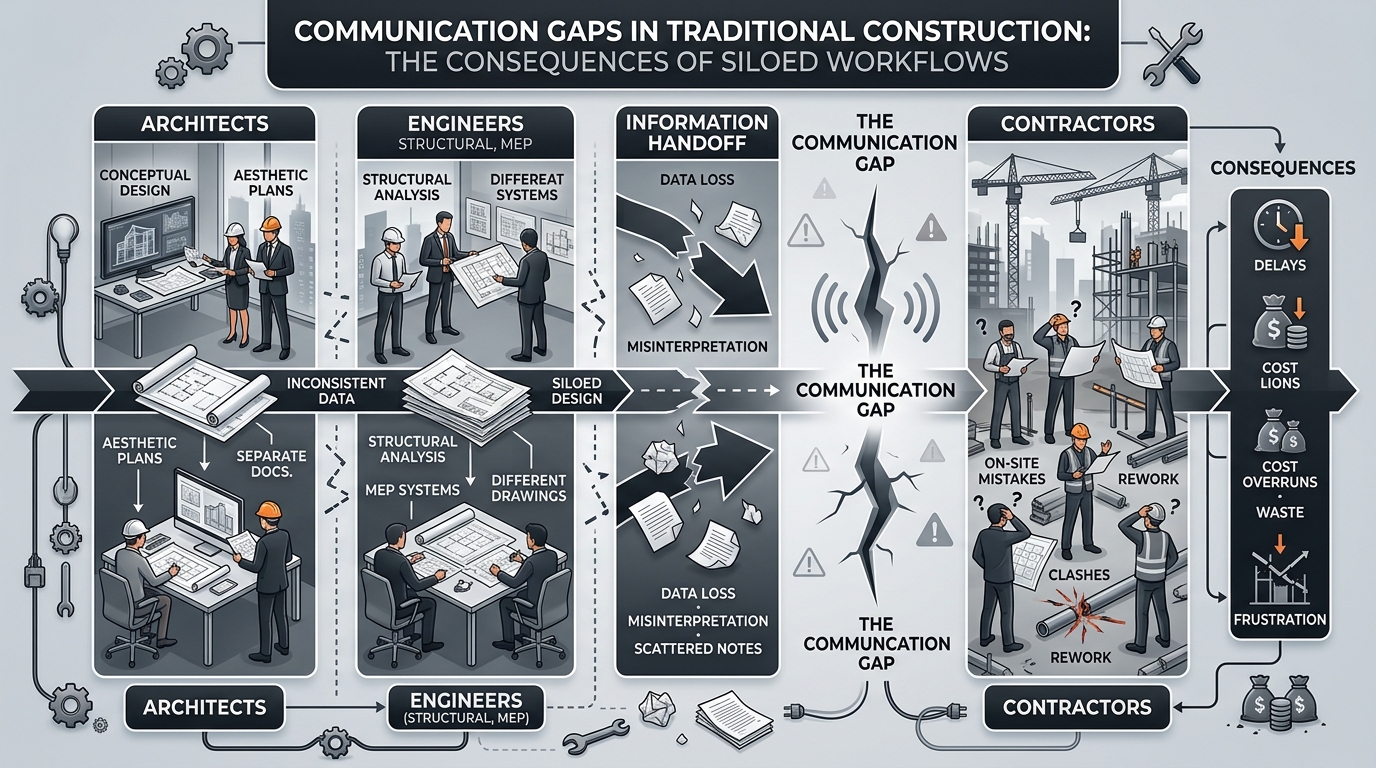
Traditional construction often involves separate teams working independently.
Architects create drawings. Engineers design systems. Contractors manage construction.
When these teams do not communicate properly:
Information gets lost
Drawings become inconsistent
Mistakes happen on-site
Poor communication is one of the biggest reasons construction projects fail.
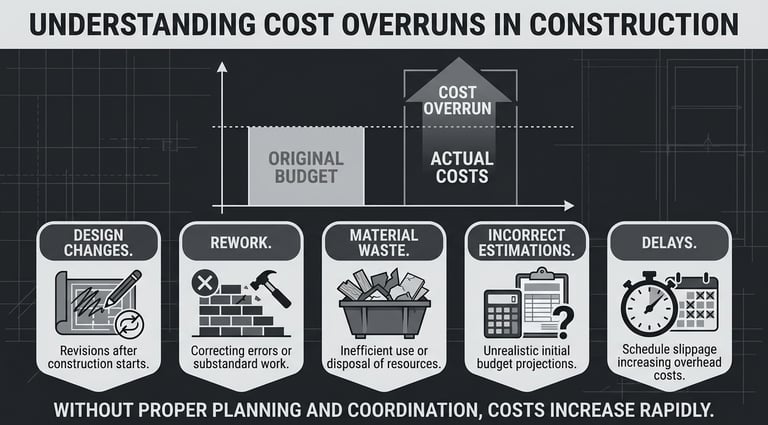
Cost Overruns
Budget overruns are extremely common in construction.
These usually happen because of:
Design changes
Rework
Material waste
Incorrect estimations
Delays
Without proper planning and coordination, costs increase rapidly.
Design Errors
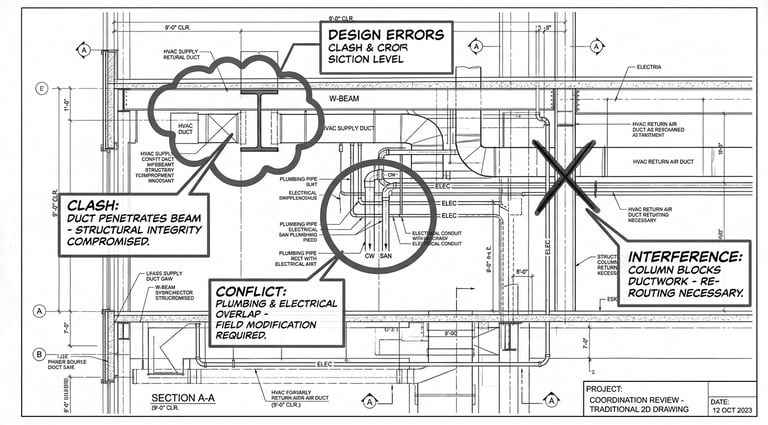
Traditional 2D drawings make it difficult to identify conflicts between systems.
For example:
A duct may pass through a beam
Electrical systems may clash with plumbing
Structural elements may interfere with HVAC systems
These errors often appear during construction, leading to expensive modifications.
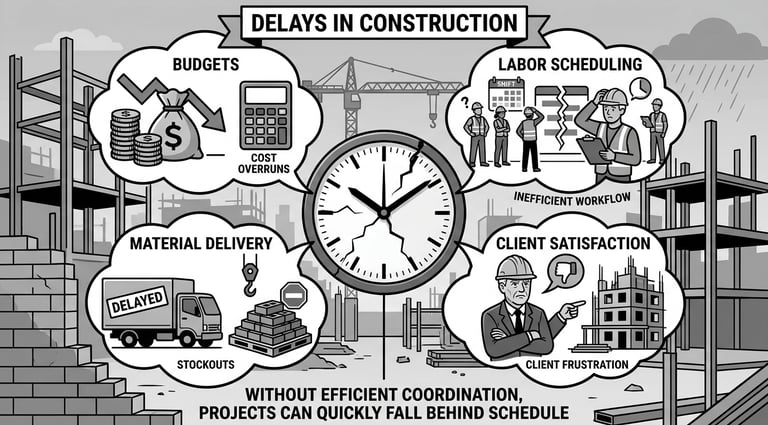
Delays in Construction
Construction delays affect:
Budgets
Labor scheduling
Material delivery
Client satisfaction
Without efficient coordination, projects can quickly fall behind schedule
What Makes BIM Different
BIM solves many of the problems found in traditional construction workflows.
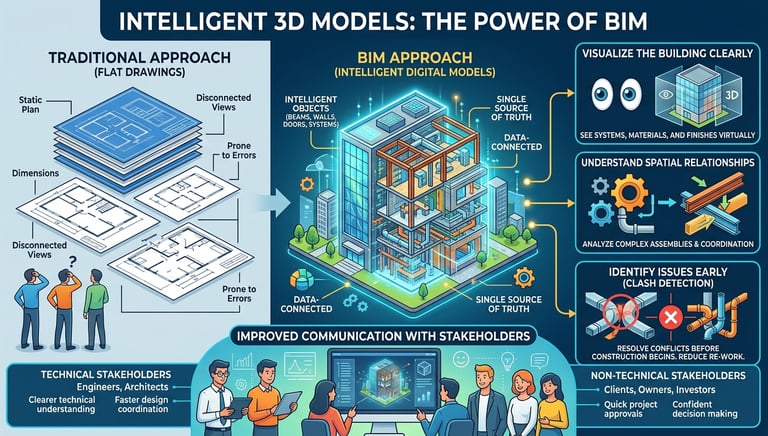
Intelligent 3D Models
BIM creates intelligent digital models instead of flat drawings.
These models allow teams to:
Visualize the building clearly
Understand spatial relationships
Identify issues early
3D visualization improves communication with both technical and non-technical stakeholders.
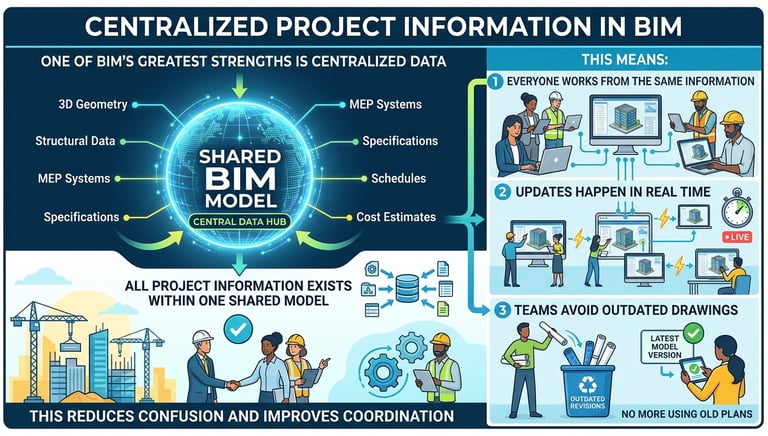
Centralized Project Information
One of BIM’s greatest strengths is centralized data.
All project information exists within one shared model.
This means:
Everyone works from the same information
Updates happen in real time
Teams avoid outdated drawings
This reduces confusion and improves coordination.
Real-Time Collaboration
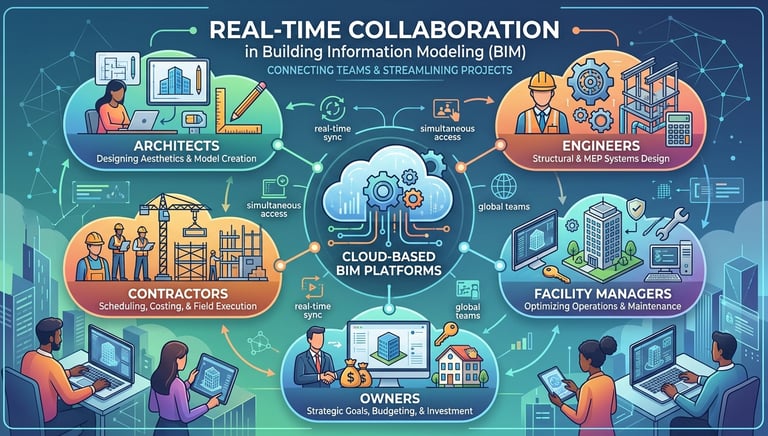
BIM encourages collaboration between:
Architects
Engineers
Contractors
Facility managers
Owners
Cloud-based BIM platforms allow teams to work together from different locations simultaneously.
Why BIM Is Necessary in Construction
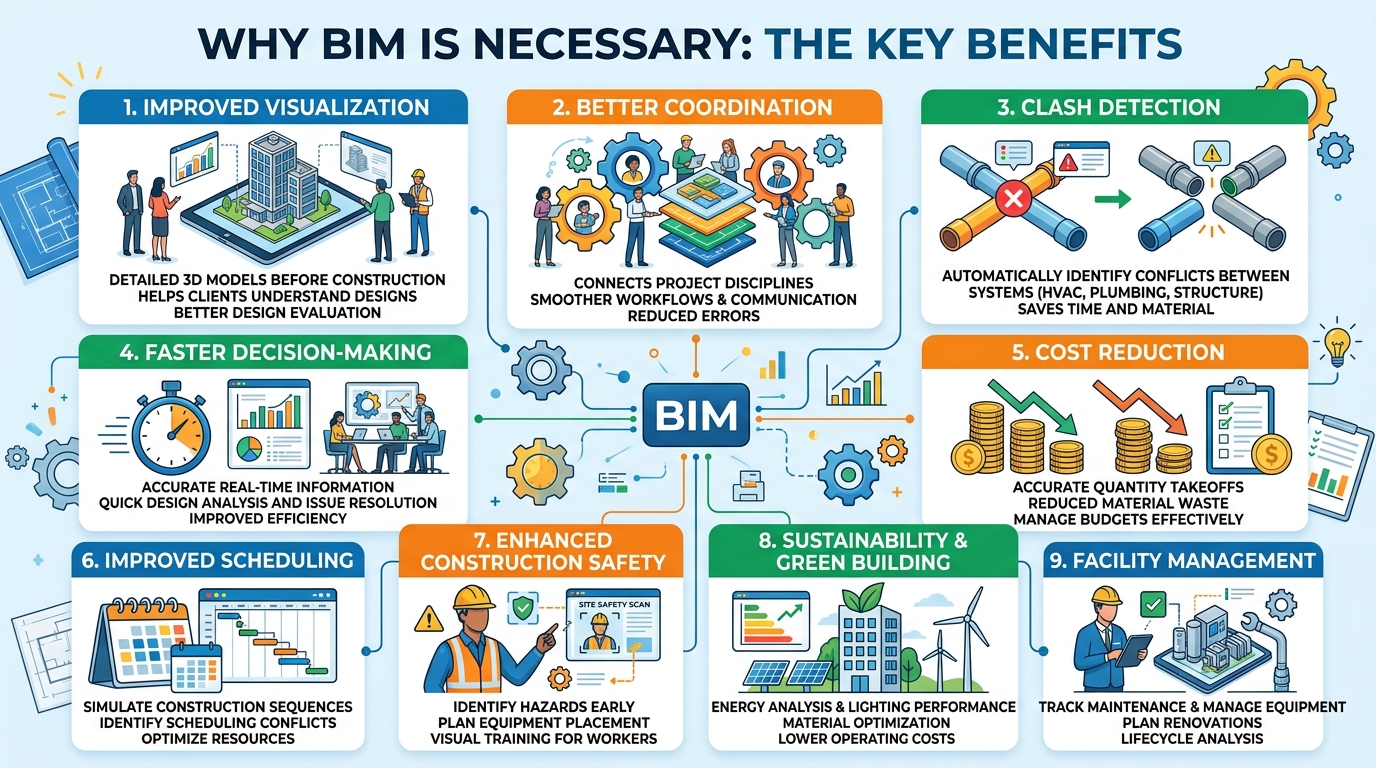
BIM (Building Information Modeling) is necessary because modern construction projects are becoming more complex and require better coordination, accuracy, and efficiency. Traditional construction methods often lead to design errors, delays, cost overruns, and communication problems between architects, engineers, and contractors.
BIM solves these issues by creating intelligent 3D digital models that allow all project teams to work together using one shared system.
Conclusion
BIM is necessary because it improves project quality, saves time and money, reduces construction errors, and increases collaboration across all stages of a project. As construction technology continues to evolve, BIM is becoming an essential part of modern building and infrastructure development.